Knowledge Hub

Central access point for food safety standards, science-based guidance, and policy tools in Myanmar.
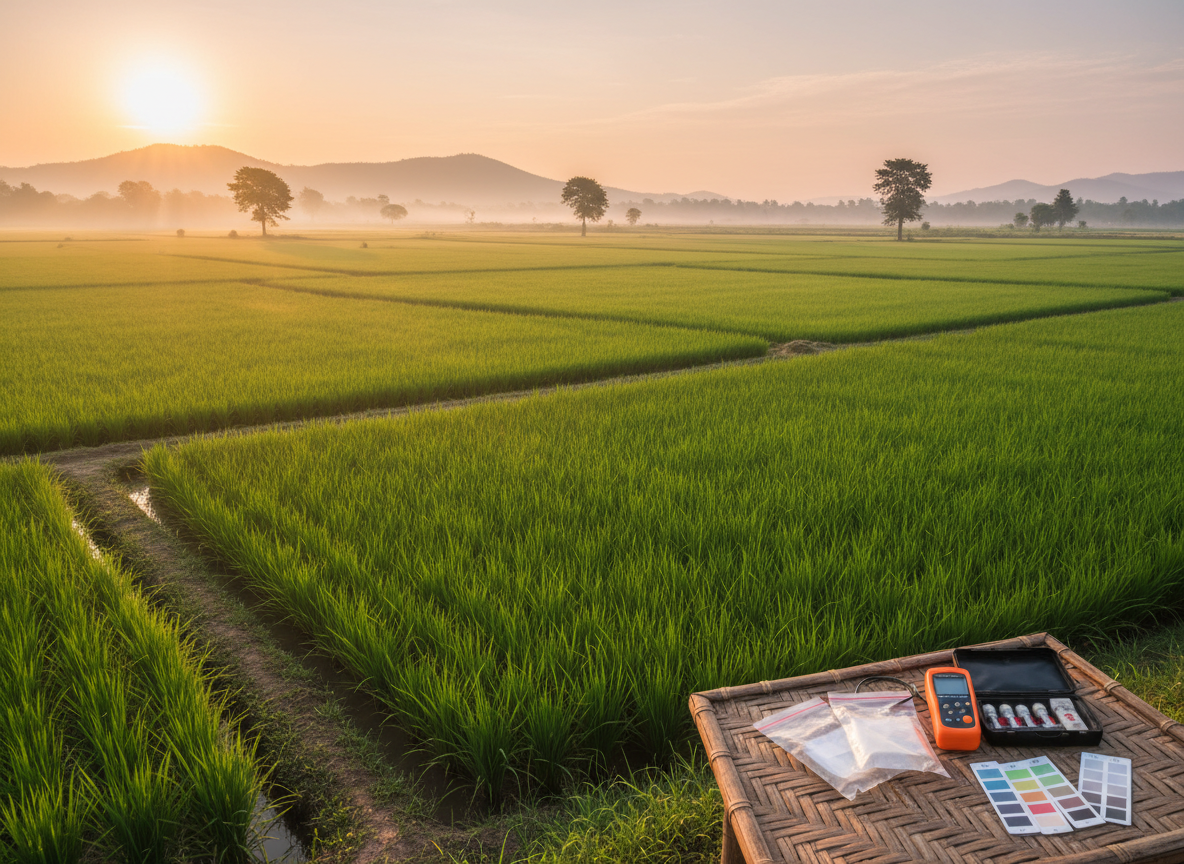
A serene, high-resolution landscape of a Myanmar rice paddy at dawn, with narrow earthen pathways dividing vivid green fields leading toward distant low hills. In the foreground, a small, portable testing kit rests on a woven bamboo mat: sealed sample bags, a compact water quality meter, and color-strip test cards arranged neatly. Soft golden morning light casts long, gentle shadows across the fields and creates a warm glow on the equipment, suggesting early-stage data collection. Photographic realism, composed using the rule of thirds to balance the expansive field and the close-up toolkit. The mood is hopeful and sustainable, highlighting the connection between primary production and scientific monitoring for food safety.
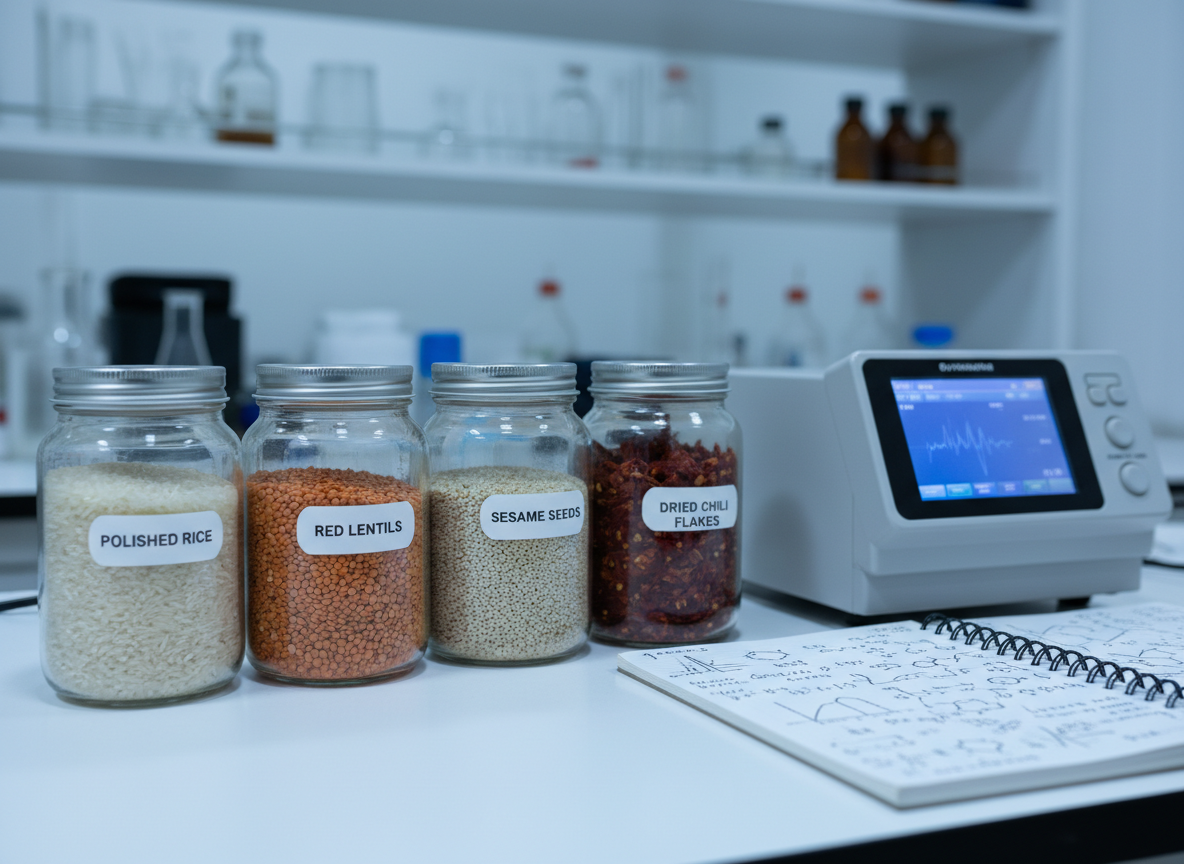
A close-up, photographic image of a set of labeled glass jars containing raw agricultural ingredients common in Myanmar—polished rice grains, red lentils, sesame seeds, and dried chili flakes—arranged in a tidy row on a smooth white laboratory countertop. Beside them sits a compact, modern spectrophotometer with an illuminated display, and a notebook open to sketched graphs and chemical structures rendered as non-legible markings. Cool, diffused artificial lighting highlights the textures of the grains and the clarity of the glass. Shot at eye level with shallow depth of field, the background fades into a soft blur of additional lab shelving. The mood is curious and innovative, focused on research and quality analysis.
A polished wooden conference table in a bright training room, covered with open binders of food safety protocols, laminated HACCP flowcharts, and sample food product packaging labeled with color-coded safety icons instead of readable text. On one side, a sleek laptop displays a blurred presentation slide, while on the other, a tablet shows a stylized map of Myanmar with highlighted agricultural regions. Soft daylight filters in through tall windows with sheer curtains, creating gentle reflections on the table. Photographic realism, shot from a slightly elevated angle with moderate depth of field. The mood is collaborative and educational, underscoring capacity building and knowledge sharing in food science.
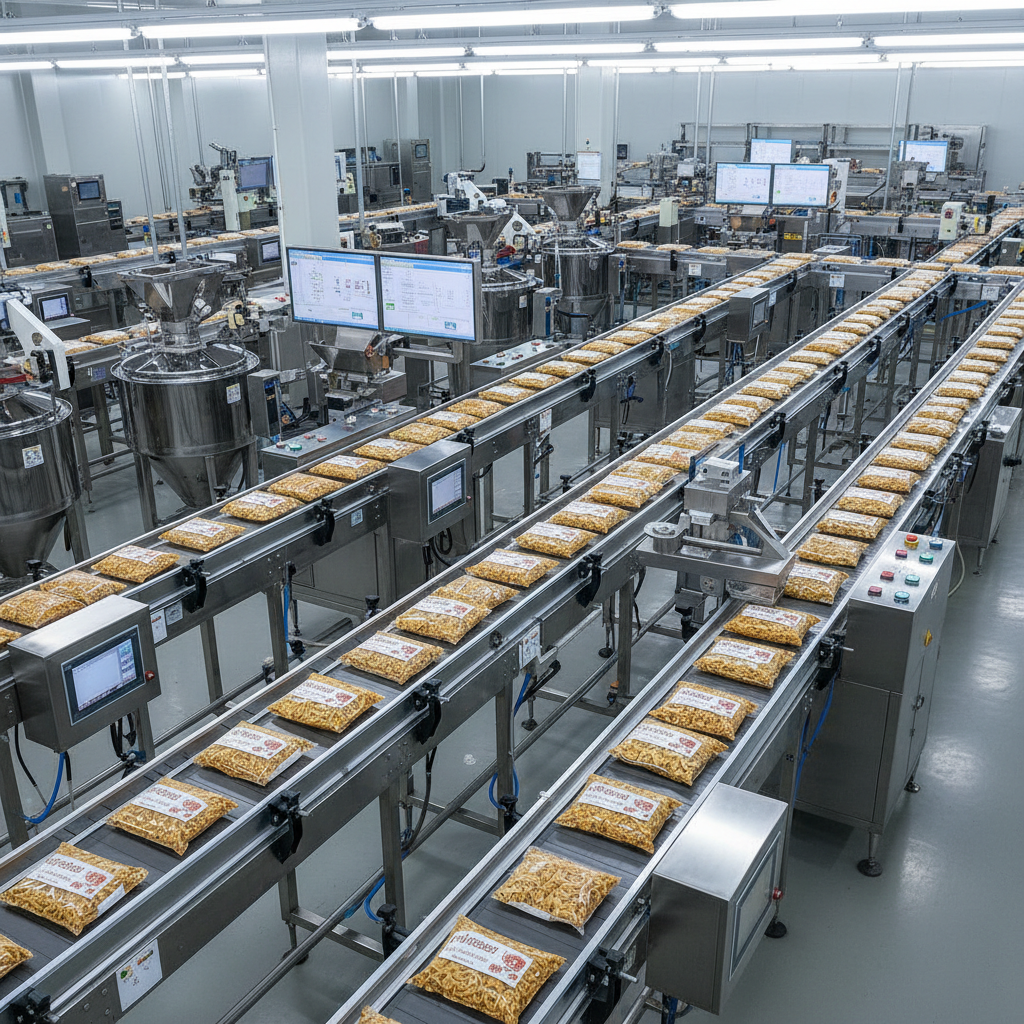
An overhead photographic view of a modern food processing line where neatly aligned transparent conveyor belts carry packaged dried noodles and snack products made from Myanmar grains. Stainless steel machinery, digital control panels with softly glowing indicator lights, and sealed mixing tanks form an orderly grid. Bright, diffused factory lighting from ceiling panels eliminates harsh shadows, creating a clean, hygienic atmosphere. The composition uses leading lines from the conveyors to draw the eye through the frame, with sharp focus across the scene. The mood is efficient and forward-looking, emphasizing safe, standardized food production and professional industry collaboration.

Resources

Access practical food safety guidelines, training toolkits, and links to national, regional, and global standards bodies that support Myanmar’s food scientists, educators, industry partners, and policymakers in improving safety, quality, and innovation.

A serene, high-resolution landscape of a Myanmar rice paddy at dawn, with narrow earthen pathways dividing vivid green fields leading toward distant low hills. In the foreground, a small, portable testing kit rests on a woven bamboo mat: sealed sample bags, a compact water quality meter, and color-strip test cards arranged neatly. Soft golden morning light casts long, gentle shadows across the fields and creates a warm glow on the equipment, suggesting early-stage data collection. Photographic realism, composed using the rule of thirds to balance the expansive field and the close-up toolkit. The mood is hopeful and sustainable, highlighting the connection between primary production and scientific monitoring for food safety.